
What Works · June 24, 2026 · 6 min · By Octavia Sarpong
How do you use silicone sheeting on a keloid or scar?
Silicone only works if you wear it right: clean skin, long daily hours, and months of consistency.
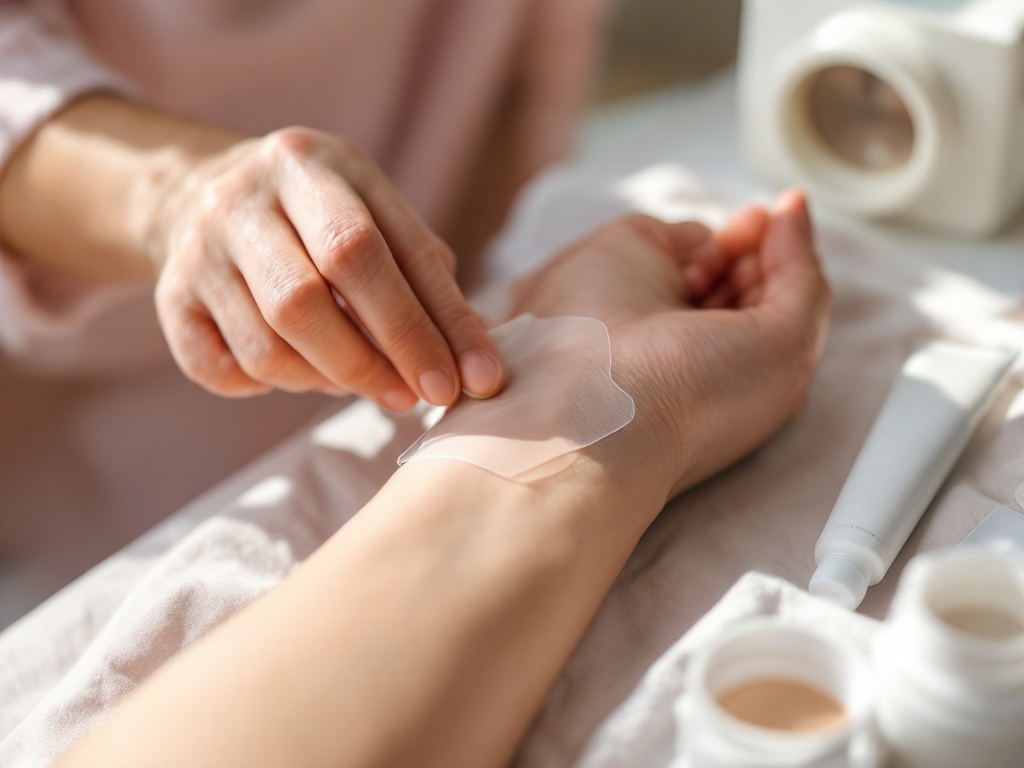
To get results from silicone sheeting, apply it to clean, fully closed skin, wear it at least 12 hours a day and ideally longer, keep using it daily for two to three months, and start early rather than on an old, established keloid. Silicone is the one over-the-counter option with genuine evidence for raised scars, but it is a prevention-and-early-scar tool, not an eraser for a large keloid that has been growing for years.
The way it works is straightforward. Silicone hydrates and seals the scar surface, which calms the collagen overproduction that drives raised scarring and eases redness and itch. Sheets and gels use the same principle. Flat, reachable areas like the chest or a lobe suit a sheet, while gels are easier on the face, over joints, and on irregular surfaces where a sheet will not stay put.
Using it well is a routine, not a one-time application. Wash and fully dry the area first. Cut the sheet a little larger than the scar so it covers the edges. Wear it as many hours a day as you realistically can, building toward all-day and overnight use. Wash the sheet daily with mild soap and water, let it air dry, and reuse it until it stops sticking, usually after two to four weeks, then swap in a fresh one.
Expectations keep people patient. Begin only once the wound has closed, never on an open or weeping wound, and give silicone a fair trial of eight to twelve weeks before deciding it is not helping. It shines on new and healing scars and as a way to prevent raised scarring after a procedure or injury. For an existing raised keloid it is a helpful add-on rather than a standalone fix. It also pairs naturally with the honest limits of over-the-counter scar creams.
Most failures come down to a few avoidable mistakes: too few hours a day, quitting after a week, applying the sheet over lotion or sunscreen that blocks skin contact, or expecting it to flatten a years-old keloid it was never going to touch. When a keloid is already thick and growing, combine silicone with in-office care such as steroid injections or pressure therapy.
The bottom line is consistency. Silicone rewards a steady daily habit kept up for a full season, and people who treat it that way, rather than as an occasional patch, are the ones who see their scars stay flatter and calmer.
Further reading: Silicone gel sheeting for treating keloid scars (Cochrane Database Syst Rev 2023); Silicone gel sheeting for preventing and treating hypertrophic and keloid scars (Cochrane Database Syst Rev 2013); A review of the biologic effects, clinical efficacy, and safety of silicone elastomer sheeting for hypertrophic and keloid scar treatment and management (Dermatol Surg 2007).