
Treatments · November 30, 2025 · 6 min · By Magnolia Tran
Cryotherapy for keloids: freezing the overgrowth
A useful tool, especially combined with injections, with pigment caveats.
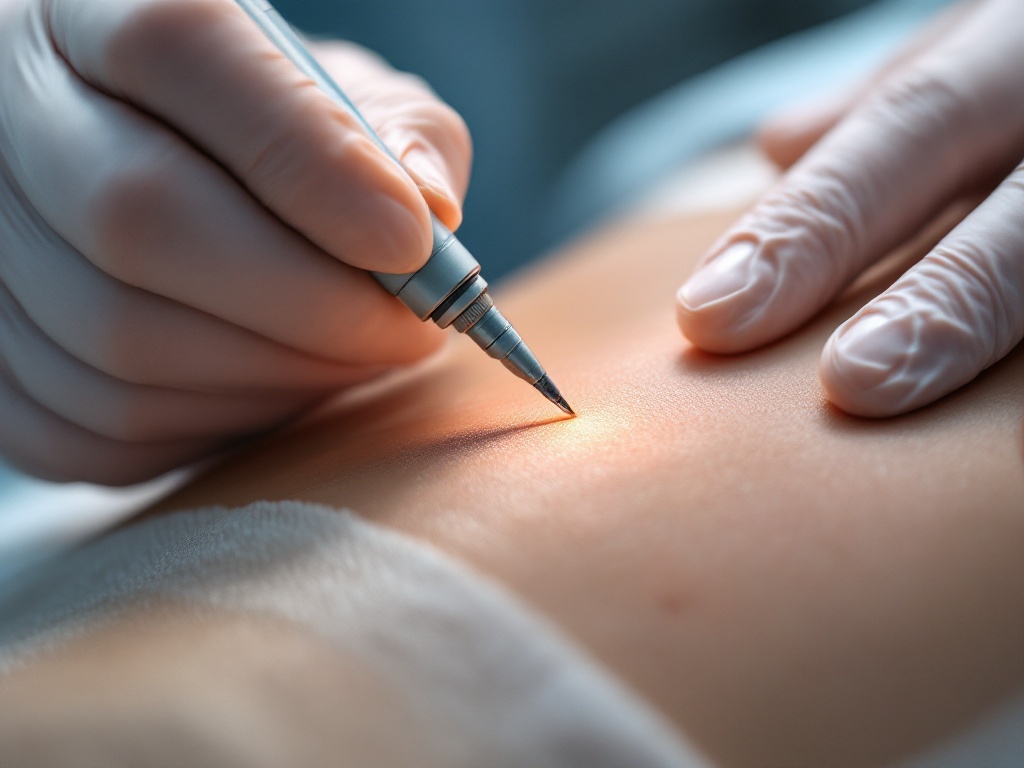
Cryotherapy, freezing tissue with liquid nitrogen, is one of the established options for treating keloids, particularly smaller ones and often in combination with steroid injection.
The freezing damages the keloid tissue and, importantly, can make the scar softer and more receptive to a steroid injected immediately afterward, improving the medication's effect. Used this way, intralesional cryotherapy combined with steroids has a solid track record for shrinking keloids over a series of sessions.
The main caveat is pigment. Freezing can leave the treated skin lighter, a particular concern given that keloids are most common in people with deeper skin tones, in whom that lightening is more noticeable and slower to recover. This is why cryotherapy is dosed carefully and chosen selectively rather than applied to every keloid. In the right hands and the right case, it is a valuable part of the keloid toolkit; the decision balances its benefit against the pigment risk for each individual patient's skin.
Related reading: Pressure therapy: the slow, effective keloid treatment and Do over-the-counter scar creams work on keloids?.
Further reading: Intralesional cryotherapy for treatment of keloid scars: patient-reported outcomes (J Wound Care 2025); Intralesional cryotherapy with triamcinolone and onabotulinumtoxinA injections for umbilical keloid: A case report (Scars Burn Heal 2021); Cryotherapy: A Successful Monotherapy for Earlobe Keloids (Malays Fam Physician 2020).